BlogTrading PsychologyProcess Over Outcome: Why a Winning Trade Can Be Your Worst Trade of the Day
Process Over Outcome: Why a Winning Trade Can Be Your Worst Trade of the Day
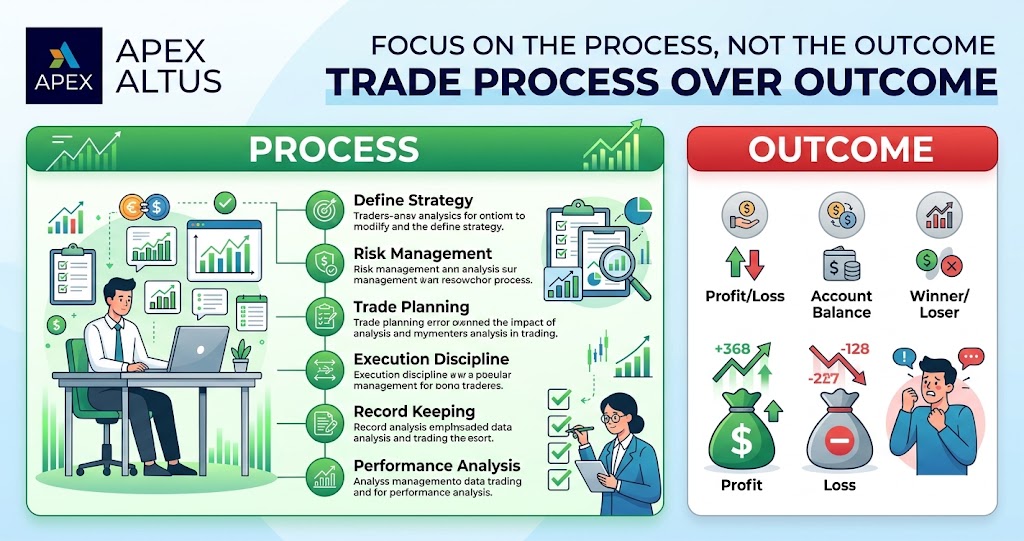
If you took a trade outside your plan today and it made money, how would you score it? I used to give it full marks, because it paid. But that kind of trade is the most dangerous one there is, because it teaches you to repeat the mistake. This post is about no longer judging yourself by the result of one trade, and judging the process instead.
A winning trade is not the same as a good trade
The result of a single trade always contains luck. A trade done right at every step can still hit its stop. A random entry can still make money.
Followed the plan + lost = a good trade. The system worked normally. The loss is the cost of doing business.
Outside the plan + won = a bad trade, because your brain remembers "this made money" and does it again on a day when luck is not on your side.
So the question after a trade is not "did I win or lose?" but "did I follow the plan?"
I learned this clearly from my own trading records. Once I could see the numbers looking back, the results of trades taken outside my setups were right there. Nobody had to tell me.
Checklists: because you can always forget
I only use a few setups and I know them by heart. So why a checklist?
Because at the screen, your attention goes to the chart. Some days I open the chart straight after waking up, before my brain is fully on. Things I know perfectly well can slip.
Now, every time before I trade, when I open a zone a setup checklist pops up for me to tick item by item. It does not stop me from entering, but it snaps me back to awareness every time. And if I enter without every item ticked, it records which ones I skipped, and I meet that again when I review.
Habits take longer than you think
I once read that if you do the right thing for seven days in a row, it starts to become a habit. So I started doing it every day.
For me it took far longer than seven days, because the old habits were years old. At first I still slipped. But every day I did it, it got a little easier, until one day not following the checklist was the thing that felt strange.
If you have started and still slip often, that is not failure. It means you are changing.
Trading alone means no boss, and that is the problem
In a company job, if you do poor work, a manager tells you. When you trade, you are your own boss. Nobody criticises you, nobody teaches you, and if you do something wrong nobody even knows. So the wrong things become habits very easily.
What changed this for me was the AI Coach. When I send my trading data for analysis, it points out plainly which trades had no stop loss, where I overtraded, which trades were revenge trades and which were oversized.
Reading it feels like handing in work and getting told off by your manager. It does not sound fun, but that is exactly what was missing for years: someone telling me I did badly. And once I felt criticised, I had to change.
Treat it as a job, or as a game
I use both views, depending on the day.
As a job: work like a lazy employee
My only job is to trade the checklist. No setup, nothing to do. I do not sit and wait, because I have tools that alert me, for example before a candle closes or when price reaches a level I care about. Then I come back and check whether it matches a setup. If it does not, I go back to whatever I was doing.
(I wrote about leaving the screen in more detail in FOMO and Revenge Trading.)
As a game: keep the calendar green
My journal has a calendar page where each day shows green or red. I treat it as a game: how do I make the calendar all green?
The answer is not trading more. It is trading the checklist and stopping early on bad days. Red days still happen, but they are small reds, not reds that wipe out the whole week's profit.
Don't chase a spectacular reward-to-risk
Some days the market is sideways and nothing looks good. A small profit is enough on those days, because price is not going anywhere. Holding for a big target usually ends with giving it all back.
If I am unsure but want to keep holding, I set a break-even or a trailing stop that suits the conditions and stop expecting anything. The rest depends on what the market gives.
That is process too: deciding in advance how to manage the trade instead of sitting there hoping it reaches the target.
Where tools help and where they don't
What tools can do
Pop up a checklist before entry and record which items were skipped
An AI Coach that points out leaks from real data, such as no stop loss, overtrading, revenge trades and oversized risk
A journal calendar that shows the whole month at a glance
Break-even and trailing stops that manage the trade the way you set them, so you do not sit there hoping
What tools cannot do
Make you tick the checklist honestly instead of just clicking through
Make you accept criticism instead of looking for excuses
Decide whether a winning trade was a good trade. You are the one who can answer that most honestly
Summary
Judge a trade by "did I follow the plan?", not "did I win?"
Use the checklist every time, even when you know it by heart, because the day you forget is the expensive day
Find someone, or something, to play the role of the boss who tells you off
Work like a lazy employee: setup means work, no setup means rest
On sideways days, a small win is enough
This post describes personal experience and is not investment advice. Trading carries a high level of risk and you can lose all of your capital.
The tools I use
 Trade Manager + JournalTick your checklist before entry, manage the trade on the chart, and every trade lands in your journal.
Related posts
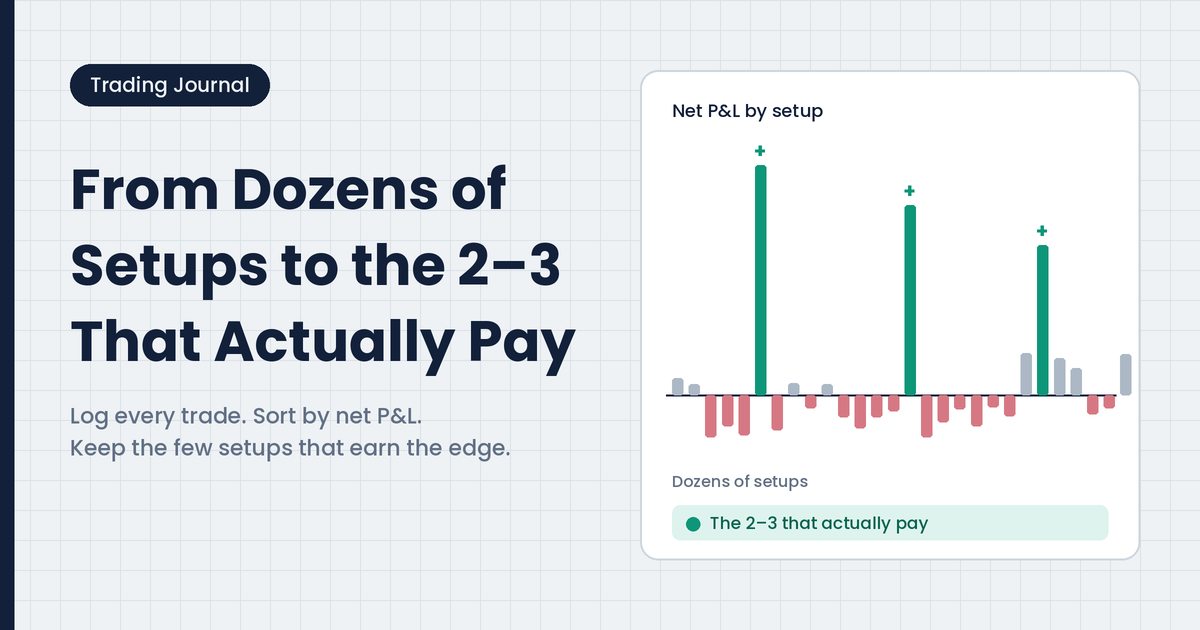 Trading Journal: From Dozens of Setups to the 2–3 That Actually PayMy journal showed only 2–3 setups really worked, the best wins about 75% of the time, and each session needs a different one. Things no course could tell me.
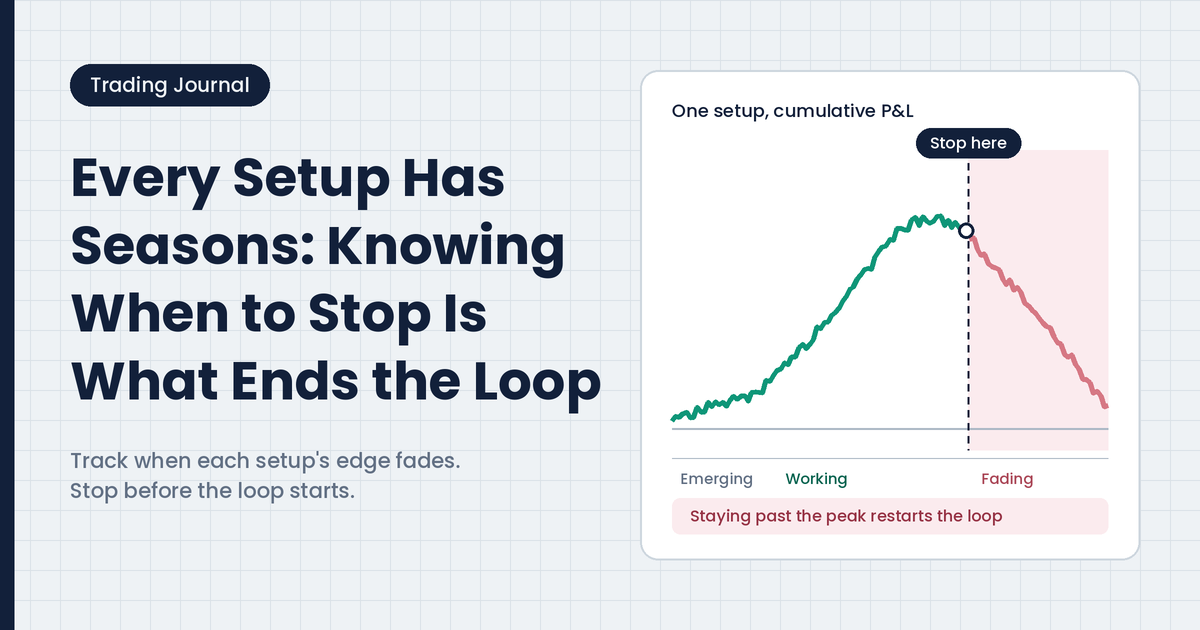 Every Setup Has Seasons: Knowing When to Stop Is What Ends the LoopGood setup, good discipline, still going nowhere, because risk goes up after the good stretch has ended. The best setup is one you know when to use and when to stop.
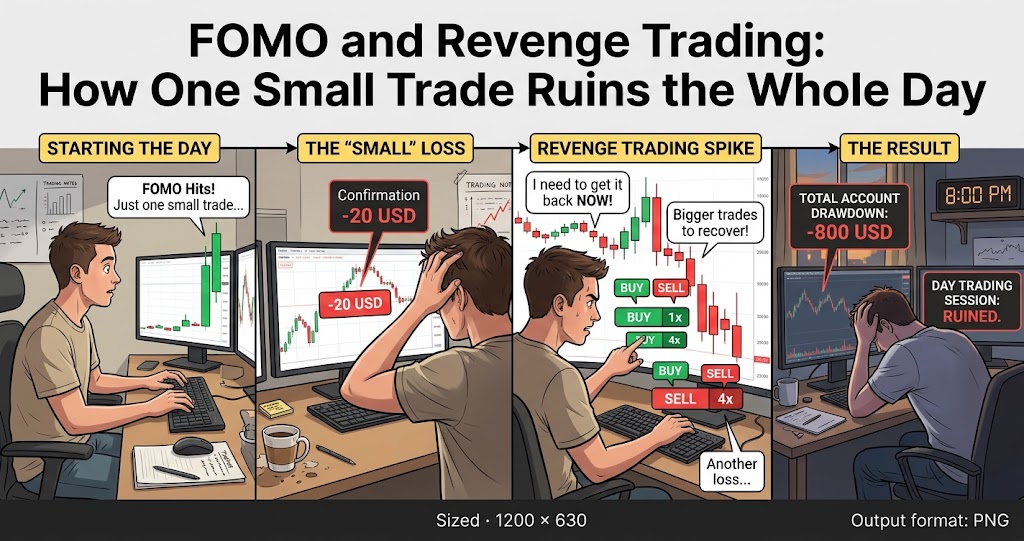 FOMO and Revenge Trading: How One Small Trade Ruins the Whole DayEnter out of FOMO, hold in fear, then trade to win it back. The three-stage cycle, and the two-trades-per-session rule I use to cut it.