BlogTrading PsychologyTrading Journal: From Dozens of Setups to the 2–3 That Actually Pay
Trading Journal: From Dozens of Setups to the 2–3 That Actually Pay
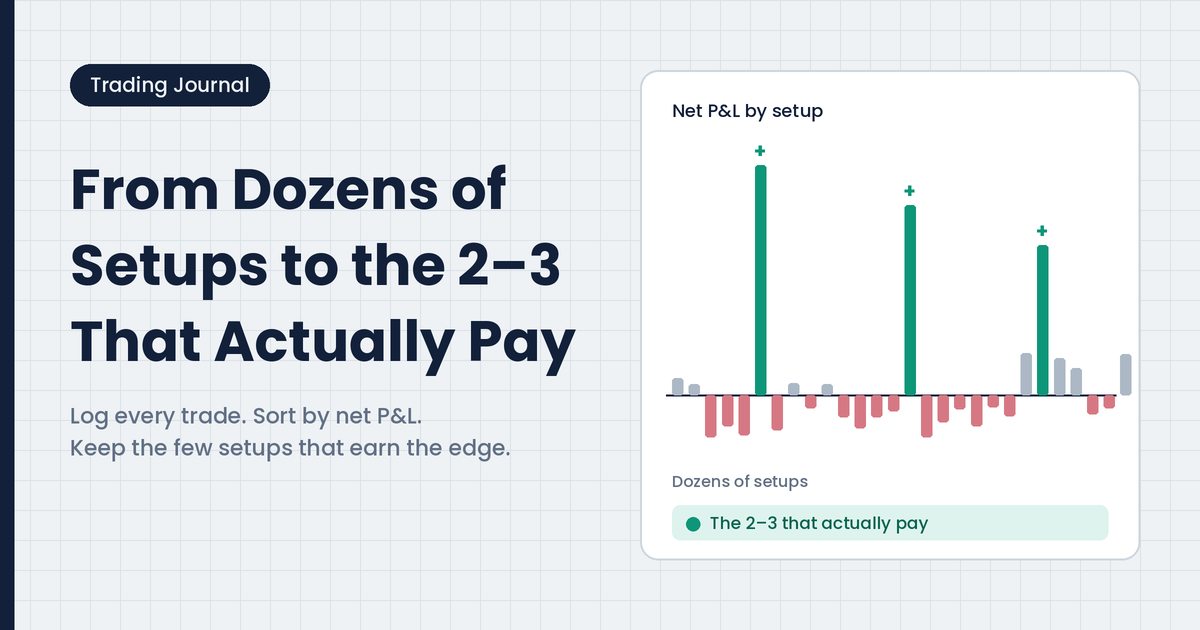
I have been in the market a long time. I have watched the videos, read the articles and followed plenty of people who teach. I had dozens of setups in my head, but no idea which of them actually made me money, until I started keeping a trading journal. This post is about what my journal told me, which is something no course could have told me.
The problem with knowing a lot of setups
The more setups you know, the more reasons you have to enter in any situation. Whichever way the chart goes, there is a setup for it. That sounds good, but in practice it means trading everything you see, with no way of knowing what works, because everything is mixed together.
During the years I kept leaving and coming back to the market, I never looked at why I lost (I wrote about that in the first post). With no data, every decision came from feelings.
What my journal told me
1. Only 2–3 setups really worked
I tried the setups I knew and recorded which one each trade used. Once there was enough data, the picture was clear. Out of dozens of setups, only about two or three worked well for me.
The best one has a win rate of about 75%. Others I used to be confident in turned out to have numbers nowhere near as good as I thought.
Without the records I would still be mixing them all together, never knowing that my best setup was being dragged down by the bad ones.
2. Each session is a different film
Something I had never thought about: each market session moves completely differently. Europe, New York and Asia are so different it is almost like trading different instruments.
My journal showed me that
The European session suits setup A, and it is where I make a profit most often
The New York session needs setup B
The Asian session mostly lost, so I stopped trading it (the reason is in the FOMO post)
The same setup that makes money in Europe can lose money in New York. If you only look at your overall results without splitting by session, you will never see this.
3. Each session has its own profitable window
Within each session, the times when price offers good opportunities tend to be the same times, occasionally shifting a little, but not often. Once you know the timing, you do not need to watch all day. You only need to be there for the part that matters.
4. In a losing stretch, get out as fast as you can
This was the biggest light my journal switched on. Losses tend to come in stretches, and if you get out of a stretch quickly, you still have capital and energy left for when the setup starts working again, which is when the real profits come.
This matters so much that I will give it a full post of its own next.
From journal to checklist
Once I knew which setups worked and which session needed which setup, I wrote it down as a setup checklist that pops up before every entry (more in the Process Over Outcome post).
A checklist that does not come from your own data is just someone else's rules copied over. A checklist that comes from your journal is a set of rules proven to work for you.
Be careful when reading the numbers
You need enough trades. A win rate from 10 trades says very little, luck still dominates. Keep collecting until the numbers settle.
Win rate alone is not enough. Look at it together with the average size of wins and losses. A setup that wins often but wins small and loses big can still lose money.
Break the numbers down. Split by setup, by session and by time of day. A single combined figure hides the truth.
Where tools help and where they don't
What tools can do
Record entry price, exit price, time and result for every trade automatically, with no manual logging
Summarise results by setup, by session and by time of day, so you can see what makes money and what does not
A calendar that shows the good and bad stretches of the whole month at a glance
What tools cannot do
Know which setup a trade used. If you do not tag it, there is no per-setup data
Record what you were thinking and feeling at the time, which is often the most revealing part
Make you come back and read it. A journal nobody reads is just a file
Summary
Knowing many setups does not help if you do not know which ones make money
Record which setup every trade used, then look at results by setup and by session
Each session is a different film, and the setups that work are different too
Turn what your journal tells you into your own checklist
This post describes personal experience and is not investment advice. Trading carries a high level of risk and you can lose all of your capital.
The tools I use
 ApeX JournalRecords every trade automatically, with results by setup and session, a calendar and an AI Coach.
Related posts
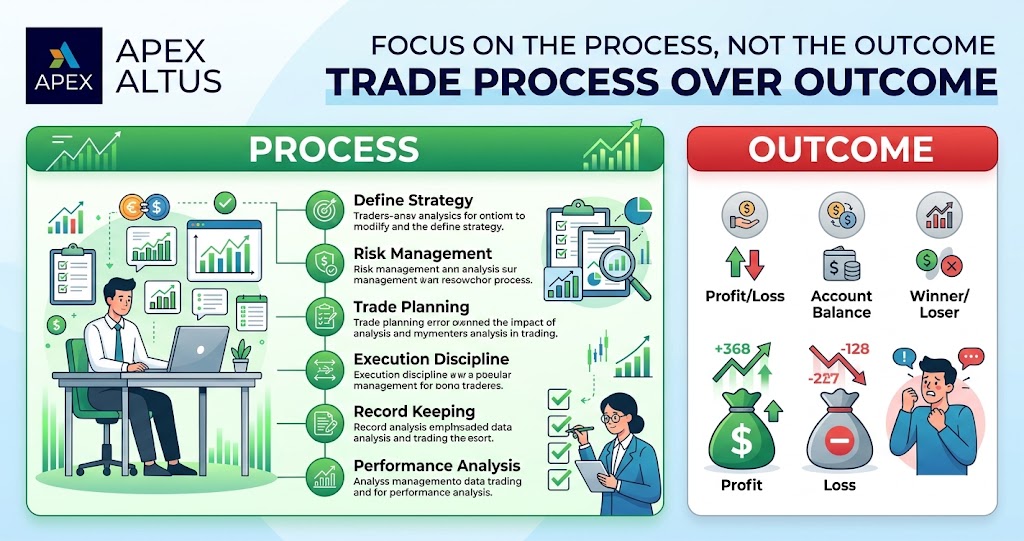 Process Over Outcome: Why a Winning Trade Can Be Your Worst Trade of the DayJudge a trade by whether you followed the plan, not by whether it won. A checklist that snaps you back, an AI Coach that plays the boss, and working like a lazy employee.
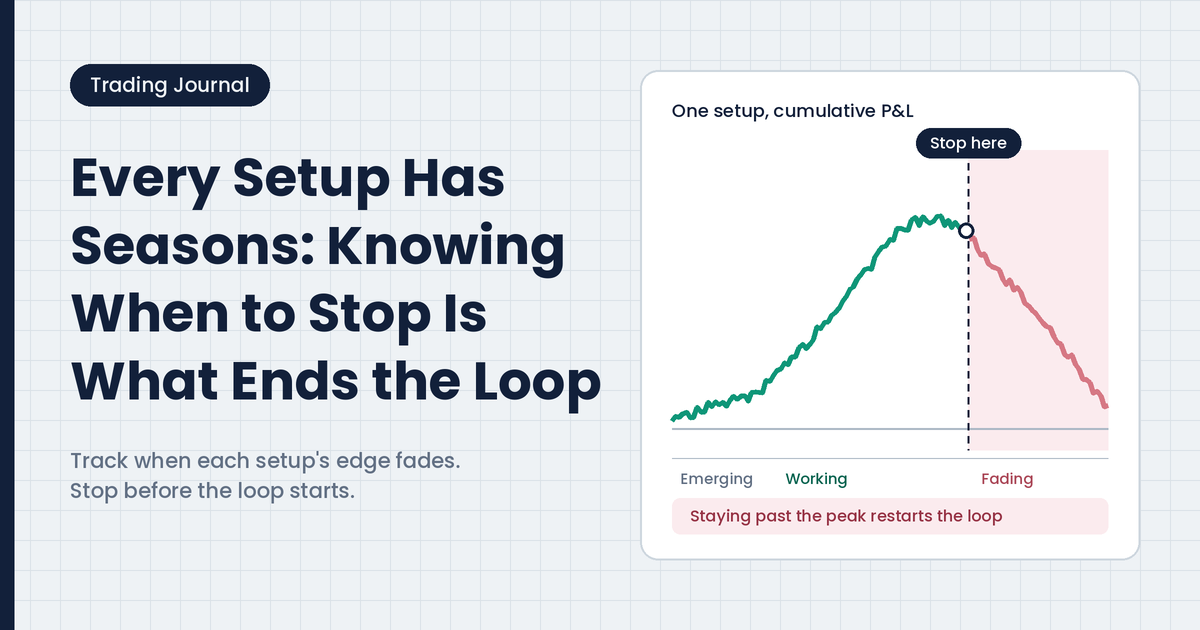 Every Setup Has Seasons: Knowing When to Stop Is What Ends the LoopGood setup, good discipline, still going nowhere, because risk goes up after the good stretch has ended. The best setup is one you know when to use and when to stop.
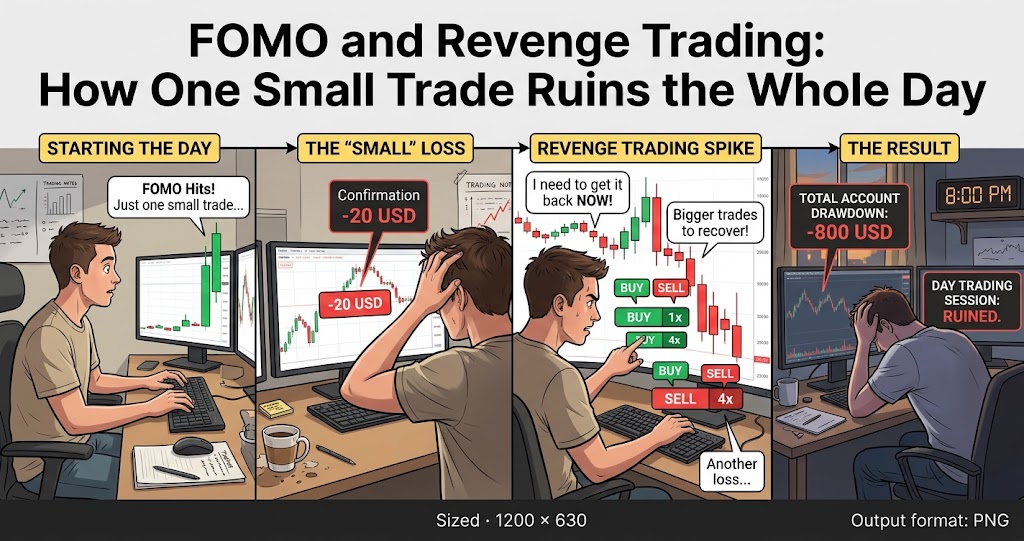 FOMO and Revenge Trading: How One Small Trade Ruins the Whole DayEnter out of FOMO, hold in fear, then trade to win it back. The three-stage cycle, and the two-trades-per-session rule I use to cut it.