BlogTrading PsychologyFOMO and Revenge Trading: How One Small Trade Ruins the Whole Day
FOMO and Revenge Trading: How One Small Trade Ruins the Whole Day
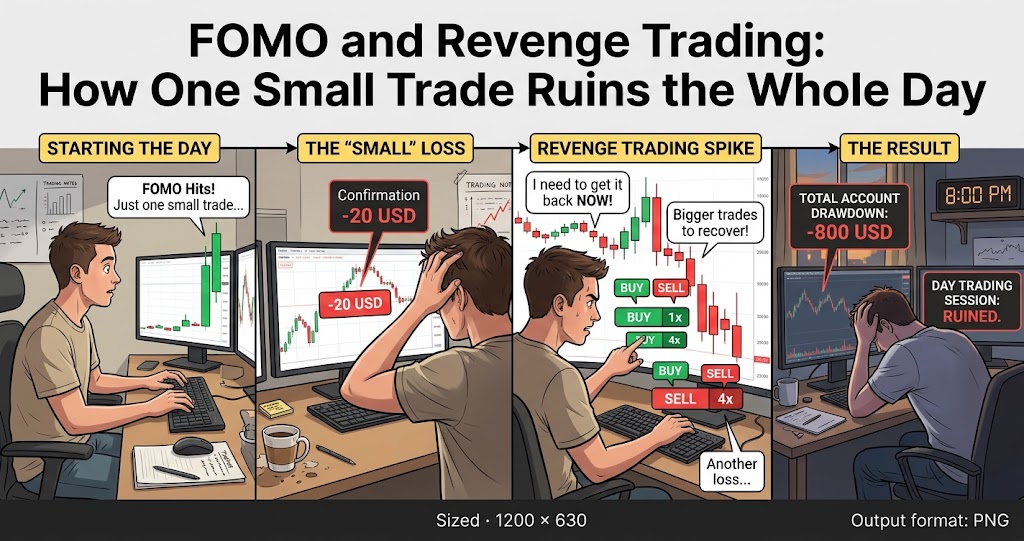
Many of my worst losses did not start with a big trade. They started with one small trade that I should never have taken, which then spread until the whole day was ruined. This post is about that cycle and the simple rules I use to cut it.
One trade that took the whole day
I saw the chart moving fast, got scared of missing it, and jumped in, even though I had no trade setup behind it at all.
Soon price pulled back and fear kicked in. I closed the trade. Price bounced, so I opened again. It dipped, so I closed again. Open, close, open, close. Each round lost a little, but together they lost several times more than they should have.
The painful part is that if I had simply held the first trade until it hit the stop loss, I would have lost very little.
And it did not end there. After the loss I got angry and wanted it back. The next trade was not taken because of the chart. It was taken because I wanted my money back.
The cycle has three stages
1. FOMO: entering out of fear of missing out
The sign is entering without being able to name the setup. The only answer in your head is "it's moving, I'll miss it."
2. Holding the trade in fear
A trade with no plan behind it has nothing to tell you whether to stay in or get out. Every pullback looks like a reversal, so you decide on feelings, opening and closing instead of letting the stop loss do its job.
3. Revenge trading: entering to win it back
After a loss the goal changes from "trade correctly" to "get the money back". The market does not know or care how much you just lost. Revenge trades tend to be bigger, faster and sloppier than normal.
Your stop loss is a loss you already accepted before you entered. Closing early to dodge it does not reduce the loss. Often it makes the loss bigger.
The rules I use to break the cycle
No more than 2 trades per session
Win or lose, after two trades I am out. This rule is not there to cap profit. It is there to stop a losing streak as early as possible. On a bad day, trades three, four and five are almost always revenge trades.
No setup means no trade, and I leave the screen
If the setup does not show up, or the checklist does not match, I switch off and go watch a film or a series, anything. The longer I sit and stare, the more I look for a reason to enter, and that is where FOMO starts.
No trading before high-impact news
High-impact news days bring a lot of volume and look tempting, but entering before the release is pure gambling. I wait for the news to come out, then look at whether price gives me a setup.
No trading while sleepy
I go to bed late. I tried getting up to trade the Asian session while still half asleep, and it went even worse. About 80% of my Asian-session trades lost money, so I stopped trading that session entirely.
My rule now is to sleep properly before I trade. A rested brain stays aware and remembers what it should and should not do. A tired brain follows emotion much more easily.
Trading less, getting better results
What surprised me most was that when I traded less and stopped focusing on the chart all day, my results got far better than I expected. Most of the trades I cut were FOMO and revenge trades, which were the most expensive trades anyway.
Where tools help and where they don't
What tools can do
Send alerts to your phone or Telegram when a candle is about to close or price reaches a level you care about, so you can walk away without fear of missing it
Warn you before news is released, so you do not open a trade right before a big release by accident
Set a limit on the combined loss of your open trades and close them all automatically when it is reached
Record every trade, so you can look back at how the trades taken after a losing streak actually performed
What tools cannot do
Know that you are angry. No program can spot it before you click
Make you actually get up and leave the screen
Stop you from cancelling your own two-trade rule
The only person who knows you are about to take a revenge trade is you. What works best is setting your stop rules in advance, while you are still calm.
Summary
No setup, no trade, however fast the chart is moving
Once in, let the stop loss work. Do not open and close out of fear
No more than 2 trades per session, win or lose
No trading before high-impact news, no trading while sleepy
Nothing to do? Leave the screen
If you have not read it yet, the previous post Is Mindset More Important Than Strategy? tells how I got here.
This post describes personal experience and is not investment advice. Trading carries a high level of risk and you can lose all of your capital.
The tools I use
 ApeX Trade ManagerLot size from your risk, SL/TP, break-even and phone alerts, in one panel on MT5.
Related posts
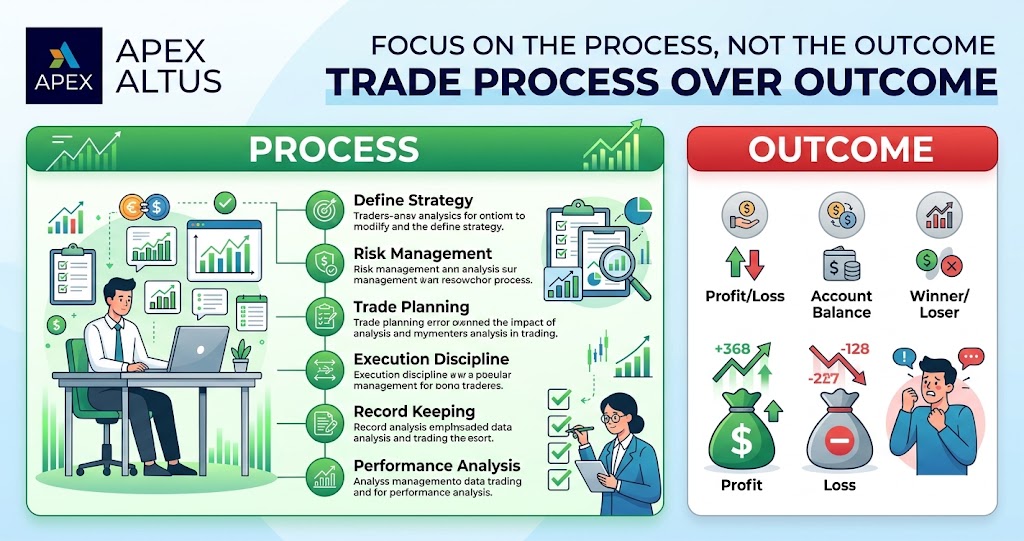 Process Over Outcome: Why a Winning Trade Can Be Your Worst Trade of the DayJudge a trade by whether you followed the plan, not by whether it won. A checklist that snaps you back, an AI Coach that plays the boss, and working like a lazy employee.
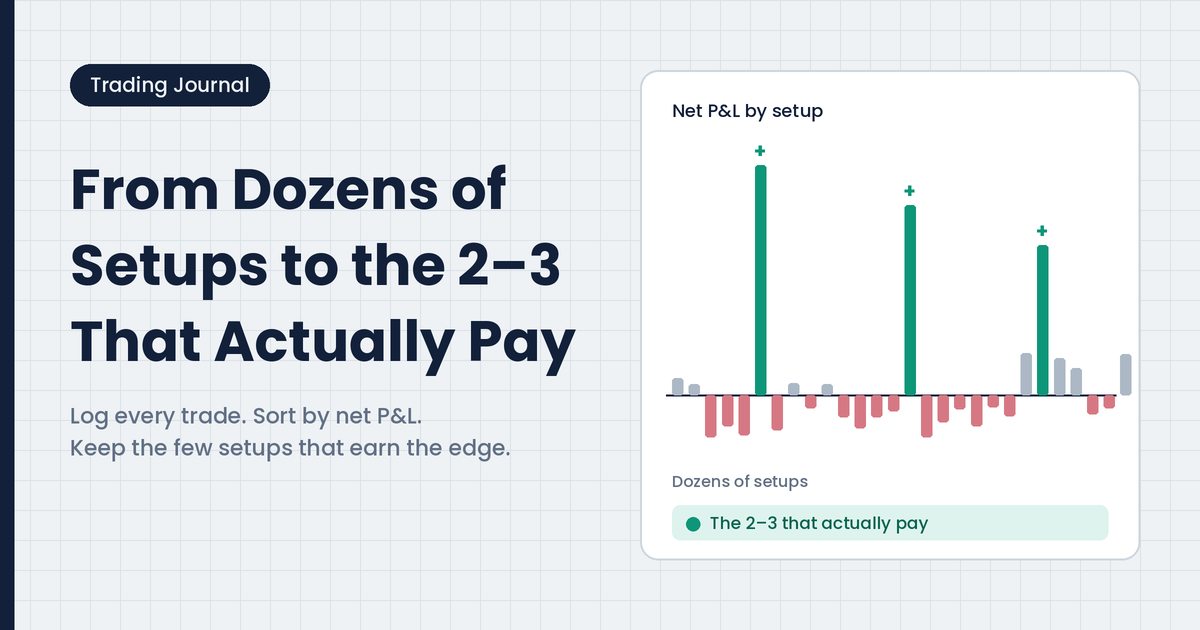 Trading Journal: From Dozens of Setups to the 2–3 That Actually PayMy journal showed only 2–3 setups really worked, the best wins about 75% of the time, and each session needs a different one. Things no course could tell me.
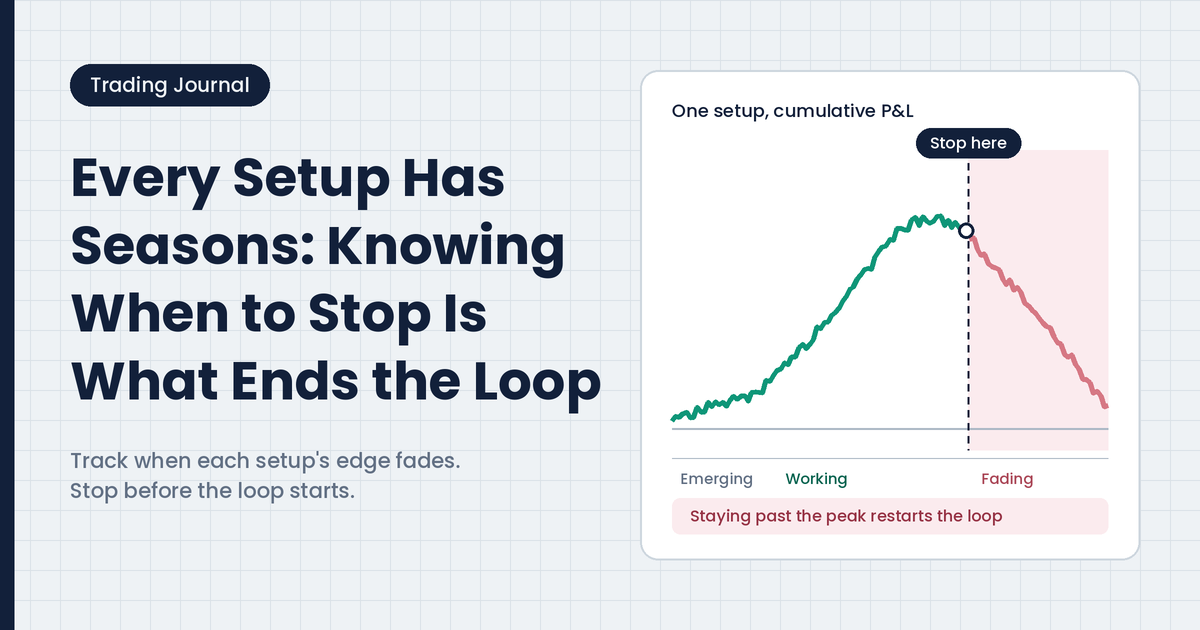 Every Setup Has Seasons: Knowing When to Stop Is What Ends the LoopGood setup, good discipline, still going nowhere, because risk goes up after the good stretch has ended. The best setup is one you know when to use and when to stop.