BlogTrading PsychologyEvery Setup Has Seasons: Knowing When to Stop Is What Ends the Loop
Every Setup Has Seasons: Knowing When to Stop Is What Ends the Loop
After I stopped splitting positions, set a stop loss on every trade, built a checklist and kept a journal, I still had one problem left. My results were win some, lose some, going nowhere. This post is about the last key that got me out of that loop, and it is something I have almost never seen anyone talk about directly.
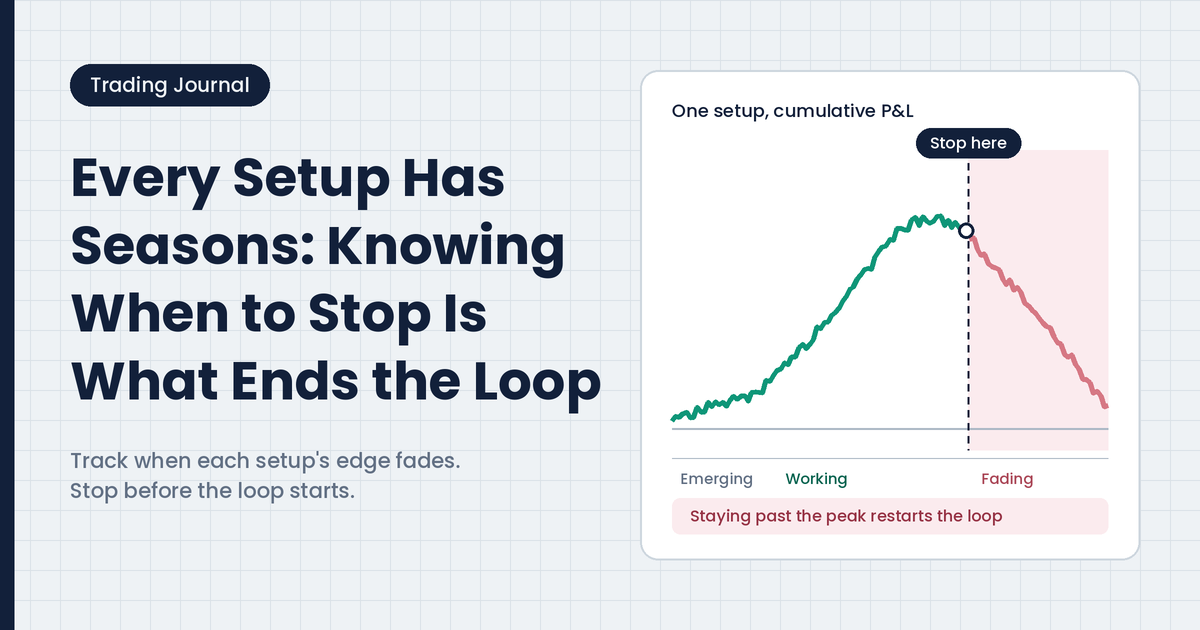
Every setup has periods when it doesn't work
My best setup wins about 75% of the time (I wrote about it in the Trading Journal post). But 75% does not mean it wins three out of four trades evenly every week.
It comes in stretches. There are periods when the market moves in a way that suits the setup and it wins several in a row, and periods when the market changes character and the same setup loses in a row. Like seasons.
When the setup is working, that is harvest time
When the setup is not working, that is when you stop as fast as you can
No setup works all the time, however good it is.
The trap that kept me flat for years
This is the cycle I kept repeating without realising it:
The setup enters a good stretch and wins several in a row
I feel confident, so I increase my risk and raise the lot size, because "I'm on a roll"
But by the time I increase it, the setup's good stretch is already over
The bigger trades land in the period when the setup does not work
A few big losses give back everything I made, and sometimes more
The result: the good stretch is traded with small size, the bad stretch with big size. The setup is good, the discipline is good, and overall I go nowhere.
The problem is not the setup. It is when we increase risk. We tend to increase it when we feel most confident, which is often exactly when the good stretch is about to end.
The best setup is not the one that wins most often
What I finally understood is that the best setup is the one where you know when it works and when to stop trading it.
A high win rate does not help if you keep trading it at full size during the period when it does not work.
Not trading beats trading and losing
Most people feel that not trading means missing out. But while a setup is not working, every trade you skip is money you did not lose.
The chart isn't going anywhere. You are the one who might leave first. The market opens every day and opportunities keep coming, but capital lost during a period when you should not have been trading takes a long time to earn back.
So I stop as early as I can when I see a losing stretch, and save my capital and energy for harvest time.
How to notice the season changing
Nobody knows for sure in advance, but some signals help. Treat these as guidelines to adapt to yourself.
Look at the setup's last few trades, not its all-time win rate. If the latest trades are losing in a row more than usual, that is a signal.
Look at whether the market has changed character. Setups that work well in trending markets often fail in sideways markets, and the other way round.
Set a stop rule in advance, for example: after this many losses in a row on this setup, pause, and come back when the market returns to the conditions the setup likes.
Do not increase size because you just won. Keep risk per trade constant. Confidence is not a reason to raise the lot size.
Where tools help and where they don't
What tools can do
A journal that splits results by setup, so you can see when a setup starts losing in a row
A calendar that shows good and bad stretches visually, so you do not have to remember
Lot size calculated from a fixed risk percentage, so position size does not swell with emotion after a winning streak
What tools cannot do
Tell you in advance when a good stretch will end
Make you actually stop when part of you still wants to trade
Stop you from raising your own risk percentage when you feel on a roll
Summary
Every setup has seasons: harvest time, and a time to stop
The big trap is increasing risk after a winning streak, because it usually happens after the good stretch has ended
The best setup is the one you know when to use and when to stop
Not trading beats trading and losing. The chart isn't going anywhere
This series starts with Is Mindset More Important Than Strategy? If you have not read it yet, that is the place to begin.
This post describes personal experience and is not investment advice. Trading carries a high level of risk and you can lose all of your capital.
The tools I use
 ApeX JournalRecords every trade automatically, with results by setup and session, a calendar and an AI Coach.
Related posts
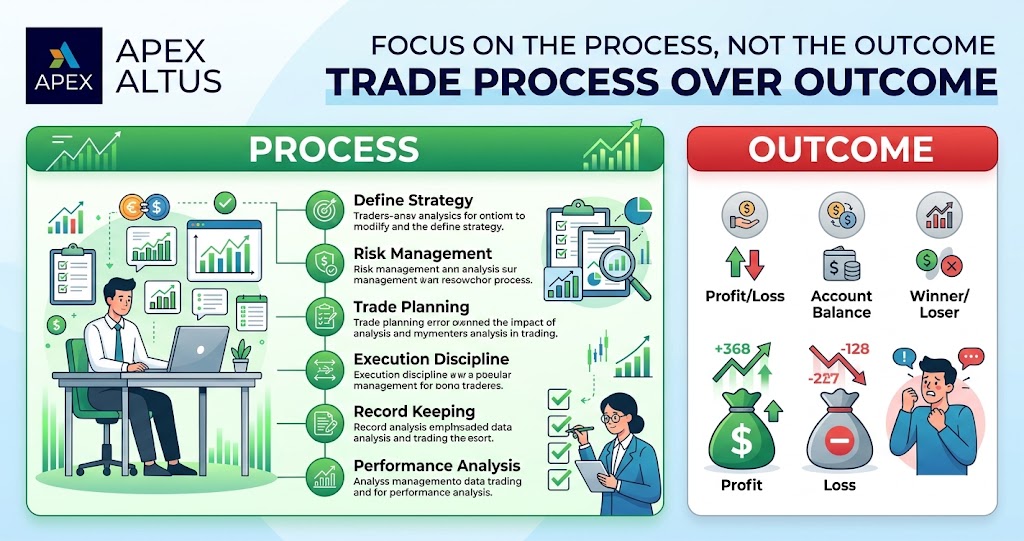 Process Over Outcome: Why a Winning Trade Can Be Your Worst Trade of the DayJudge a trade by whether you followed the plan, not by whether it won. A checklist that snaps you back, an AI Coach that plays the boss, and working like a lazy employee.
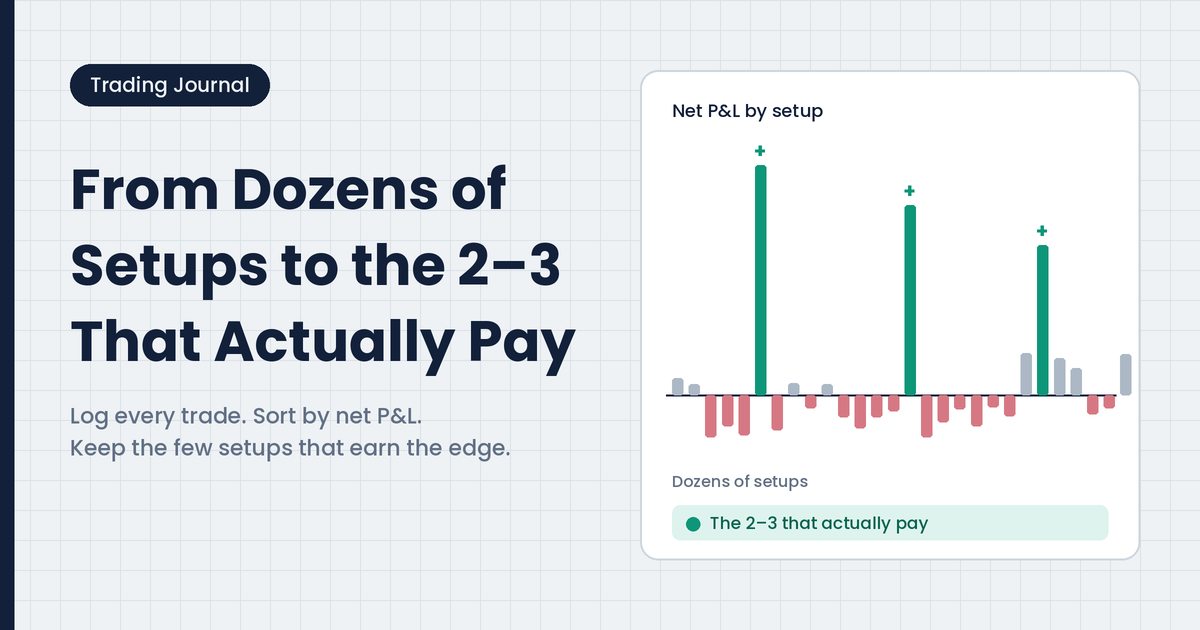 Trading Journal: From Dozens of Setups to the 2–3 That Actually PayMy journal showed only 2–3 setups really worked, the best wins about 75% of the time, and each session needs a different one. Things no course could tell me.
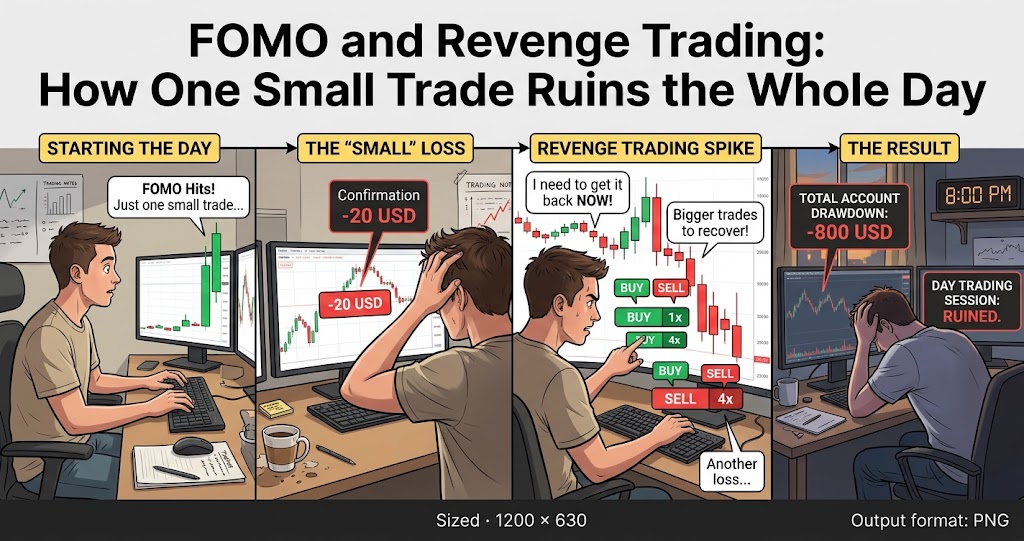 FOMO and Revenge Trading: How One Small Trade Ruins the Whole DayEnter out of FOMO, hold in fear, then trade to win it back. The three-stage cycle, and the two-trades-per-session rule I use to cut it.